Quiet burnout is draining your leadership team, and the data proves it 2026
82% of executives experience burnout at least occasionally. Most HR leaders are looking in the wrong place for the cause.
Most HR leaders can spot a burned-out employee. The declining output, the missed deadlines, the out-of-office messages that never seem to end. What's much harder to detect — and far more damaging — is the leadership team that looks completely fine on the surface, while running on empty underneath.
This is quiet burnout: the state where senior leaders and managers appear functional, engaged even, but have been operating in survival mode for so long that their capacity for real strategic thinking, emotional leadership, and creative problem-solving has quietly eroded.
In 2026, it's becoming the defining talent risk for HR leaders in knowledge-work organisations — and most companies won't notice until the exits start.
What quiet burnout actually looks like at the top:
Traditional burnout is visible. Quiet burnout isn't. It shows up as leaders who are always "available" but never truly present. Meetings that happen but produce no real decisions. Strategy sessions that feel like they're going through the motions. A team that scores adequately on engagement surveys but whose output has inexplicably plateaued.
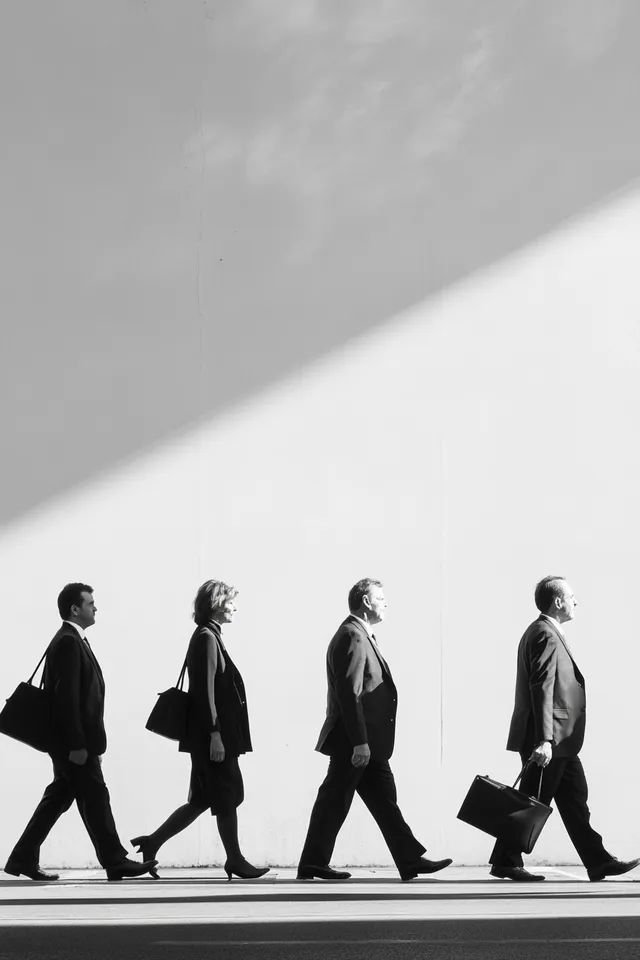
The numbers tell a sharper story. According to data published by Gitnux and Meditopia for Work, 82% of executives report feeling burned out at least occasionally, while 69% of C-suite leaders experience high levels of burnout on a weekly basis. These aren't people who have stepped back from their roles — they're still in them, still performing the surface-level functions, still responding to messages at 11pm.
"The problem isn't absence. It's presence without real capacity."
And "quiet burnout" — Meditopia's term for employees who appear engaged but are running on empty — is now being flagged as one of the defining workforce dynamics of 2026. In leadership roles, the consequences cascade further and faster than anywhere else in the organisation.
Why leadership burnout has a multiplier effect on teams.
Here's the critical thing about burnout in leadership: it doesn't stay at the top.
Gallup's global research consistently shows that approximately 70% of the variance in team engagement can be attributed directly to the manager. When the manager is depleted, the team follows. And global manager engagement has now dropped to just 27%, according to Gallup data — a figure that should alarm any people leader reading this.
The downstream effects are measurable. Teams operating under high burnout conditions show 18–20% lower productivity and markedly reduced discretionary effort. Employee engagement levels drop by up to one third in teams with persistent stress exposure. Creative output — the kind of thinking that actually moves organisations forward — is often the first casualty.
This is the compounding problem quiet burnout creates: a leadership team functioning below capacity quietly degrades the performance of every team beneath it, often long before anyone thinks to look upward for the source.
The burnout driver nobody expected..

For years, the primary burnout drivers were workload and work-life balance. Leaders worked too many hours, had too many responsibilities, didn't take enough holidays. Those factors still matter — but Deloitte's 2025 research identified a significant shift: mental fatigue, cognitive strain, and decision friction have now overtaken workload volume as the leading indicators of burnout.
In practical terms, this means that leaders aren't burning out because they're doing too much. They're burning out because the nature of the work has changed. Context-switching between fragmented digital ecosystems, managing the emotional complexity of hybrid teams, and navigating constant uncertainty — all of these create a form of cognitive depletion that simply taking a Friday afternoon off doesn't resolve.
Compounding this, 64% of surveyed professionals report that new technologies have actually increased their workloads rather than reduced them. The promise of AI and automation has, for many leaders, added a layer of cognitive complexity rather than relieved one.
Recovery, in this environment, needs to be structural. Not reactive.
Now, "taking a long weekend" isn't enough anymore.

Most organisations respond to leadership burnout with individual interventions: therapy access, mental health days, flexible working arrangements. These matter — they're table stakes, not strategy.
What they don't address is the relational and strategic dimension of leadership depletion. Leaders don't just need rest. They need the kind of reconnection — to each other, to the organisation's purpose, to a mode of thinking that isn't reactive — that normal working environments actively prevent.
This is why structured recovery interventions are worth taking seriously as a business performance lever, not just a wellbeing benefit.
Comprehensive programmes that include offsites and retreats have been shown to generate a return of $3 to $6 for every $1 invested through reduced healthcare costs and improved productivity (Retreats and Venues, 2025).
Companies that invest in strong team bonding practices see a 73% reduction in employee turnover. Those that genuinely prioritise employee engagement and wellbeing show a 23% increase in profitability.
Why strategic leadership retreats are now being treated differently in 2026.
The corporate retreat has had an identity crisis for years. Too often positioned as a reward, a morale boost, or a box to tick before annual planning season, they frequently delivered neither genuine recovery nor strategic clarity.
That's changing. The most effective leadership teams are now treating team offsites not as breaks from work, but as a different mode of doing it — one that can only happen when you remove the daily friction, create physical distance from the office dynamic, and design conditions for the kind of thinking that normal calendars never allow.
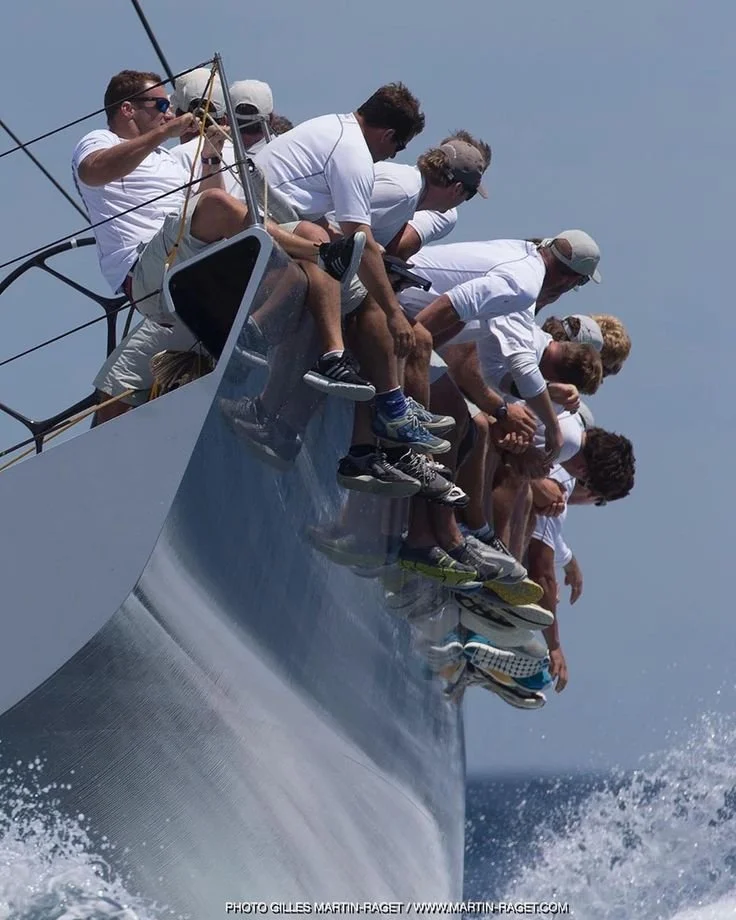
In 2026, forward-thinking organisations are moving
away from generic offsite agendas toward bespoke,
outcome-focused designs that blend genuine recovery
with strategic output.
Research by Elsewhere Offsites and Campfire Company confirms the shift: intentional, people-centric design and measurable outcomes are now the baseline expectation — not a premium. The question being asked is no longer "where should we go?" but "what does this leadership team actually need to come back stronger?"
That question requires honest diagnosis before it can be answered.
Building recovery into your leadership rhythm
The most important reframe for HR leaders is this: recovery isn't a pause from performance. It's a precondition for it.
This means treating leadership offsites not as annual luxuries but as regular interventions designed around three questions: What do our leaders need to process and let go of? What does this team need to think about differently? And what would make each person walk away with more capacity — not just more clarity?
The sequencing matters enormously. Recovery before strategy, not after it. Physical and relational grounding before the whiteboard sessions. The teams that return from a well-designed offsite don't just have better plans — they have the energy to execute them.
At SPIRA, we approach this through our Health · Work · Play framework — a sequencing logic that ensures leaders arrive at strategic sessions actually ready to think, rather than simply changing the setting for the same depleted conversations. The difference in output is not subtle.
Quiet burnout won't announce itself. But if you're an HR leader watching a leadership team that's always available but never quite at their best — the signal is already there. The question is whether you treat it as an individual problem or a systemic one.
The organisations that get this right in 2026 won't just see lower attrition. They'll see the kind of sustained performance that the industry has been trying to buy its way to for years.