The revenue drain no one puts in the budget
Every scaleup leadership team tracks the numbers that matter. CAC. NRR. Burn rate. Headcount growth. You have dashboards, weekly reviews, monthly board packs. You know your unit economics better than you know your team's vacation schedules.
But there's a number that doesn't appear on any of those dashboards, and it's probably costing you more than your next hiring class.

The line item your finance team has never seen
Disengagement is the most consistently underreported operational cost in business. Gallup estimates it costs the global economy $8.8 trillion per year in lost productivity. For an average company, disengaged employees cost an estimated 34% of their salary in lost output, not through absence, but through presence without performance.
Apply that to a 100-person German company with average salaries of €50,000: 86 disengaged employees (Gallup's Germany figure for 2024-2025) produces approximately €1.46 million in annual productivity loss. Add excess absenteeism at roughly €254 per person per additional day (Gallup's German absenteeism data), plus turnover replacement costs at 50-100% of salary when key people leave, and you arrive at a conservative annual total of €1.53-1.57 million, roughly 3% of revenue.
That number doesn't appear in your operating budget. It doesn't show up as a line item. But it's there, diffused across every slow decision, every project that took twice as long as it should have, every meeting where alignment was assumed but absent. It's not a one-time write-off. It's a recurring tax on your company's potential, charged every year.
And most leadership teams have never calculated it.
Why this is a finance problem, not an HR problem
There's a reason disengagement gets categorised as a "people and culture" issue rather than a financial one: its costs are invisible on the P&L. Unlike churn or CAC, you can't pull a disengagement figure from your BI tool. The damage is structural, showing up in your business as slower execution, thinner innovation pipelines, and capability attrition even when headcount stays flat.
But that framing is costing you the wrong conversation. When disengagement lives in the HR bucket, it competes with other HR line items for a limited budget. When it lives in the finance bucket, where it belongs, it changes the question from "can we afford to invest in people?" to "what is the annual cost of not investing?"
S&P 500 median companies lose approximately $282 million annually from worker disengagement and attrition, according to McKinsey. For a scaling company, the numbers are smaller in absolute terms but often larger as a percentage of operating costs, particularly because engagement tends to fall precisely when companies are scaling fastest and need performance most.
The ROI of doing SOMETHING

The business case for investing in engagement has become substantially clearer in recent years.
Engaged teams show 21% greater profitability and 17% higher productivity (Gallup). Mental health and structured wellbeing interventions return €4 for every €1 invested (Deloitte, 2025). Organisations with strong internal social connection see 51% lower turnover (Gallup), which at 50-100% of salary per replacement (SHRM) represents a significant direct cost saving. General wellbeing programmes return between €2 and €4.80 per €1 spent (Wellhub, 2024)!
These aren't marginal returns. At the low end, a €50,000 investment in a well-designed team engagement programme returns €100,000. At the high end, the return is closer to €240,000 in a single year, before accounting for compounding retention effects.
Compare that to the baseline cost of doing nothing: €1.5 million annually in a 100-person company.
The “compounding effect”
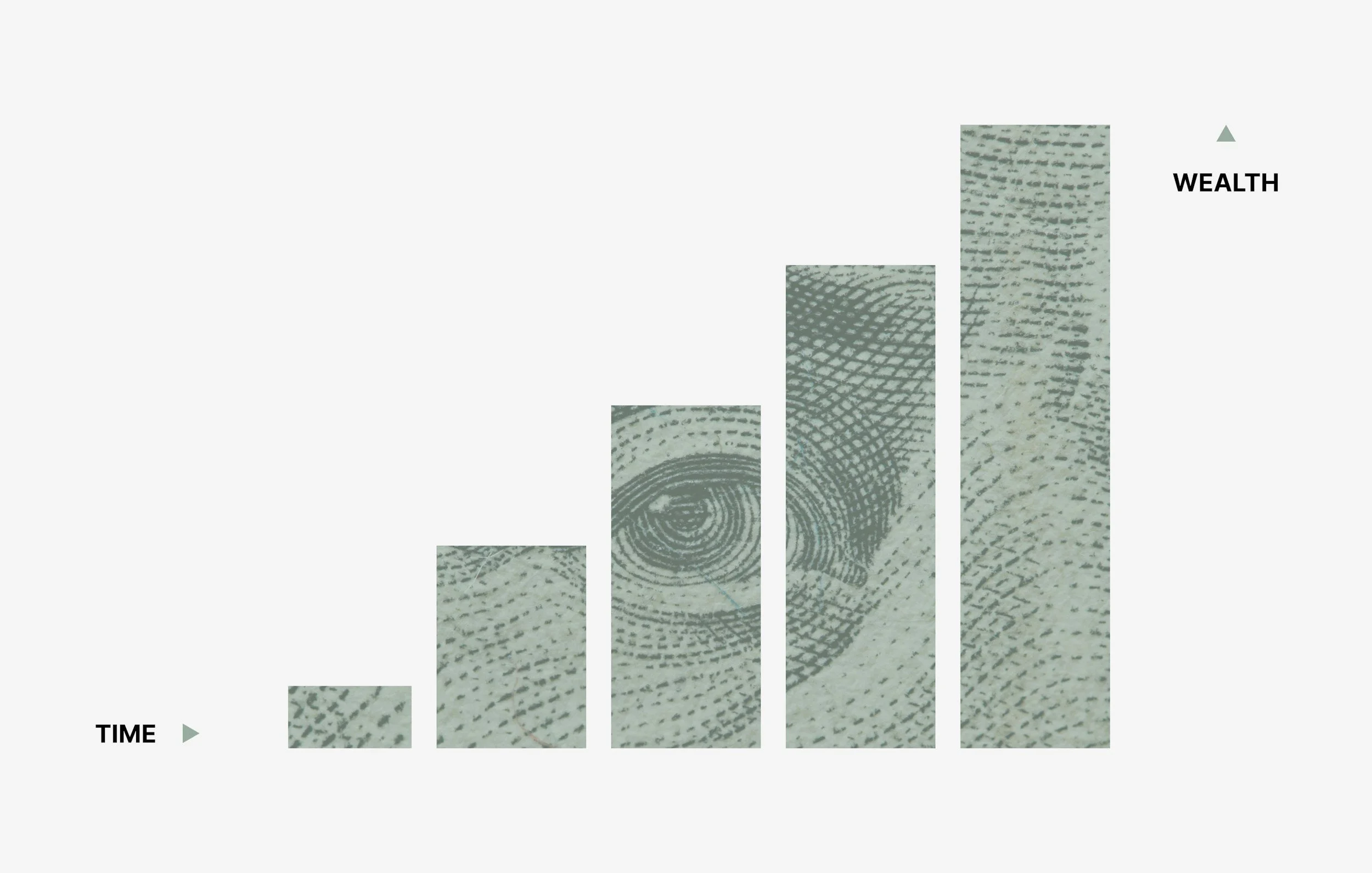
Here's the part that rarely enters the business case conversation: disengagement compounds.
A disengaged leadership team makes slower, lower-quality decisions, which compounds execution failure across every function. Talent attrition in a disengaged organisation tends to skew toward the top performers, who have the most options. Every person who leaves takes institutional knowledge, relationships, and momentum with them. The cost of replacing them is measurable; the cost of what they took is not.
Conversely, organisations that invest meaningfully in engagement create compounding returns: stronger cohesion that accelerates decision velocity, retention that preserves institutional knowledge, and a culture of connection that attracts talent in a competitive market. These effects multiply over time. The organisations that will outperform three years from now are building those conditions today.
What changes when you calculate the real cost
Most companies don't invest in engagement because the ROI feels intangible. But the cost of disengagement is not intangible, it's just invisible until you calculate it. Once you put the number on the table, the conversation changes.
The question stops being "how do we justify investing in our people?" It becomes "how long have we been paying for this without knowing it?"
Designing the conditions for genuine engagement, strategic alignment, human connection, a sense of purpose that survives the day-to-day operational grind, isn't a cultural luxury. At €1.5 million per year, it's one of the highest-return investments a growing company can make!